Hubei Xin Aneng Conveying Machinery Co., Ltd.
  • About Us

About Us

Hubei Xin Aneng Conveying Machinery Co., Ltd.

Hubei Xin Aneng Conveying Machinery Co., Ltd. was founded in 1990, and specialized in conveyor equipment and accessories. Always regard excellence as a habit and insist on making every product fine and good. Most workers have been working in our factory for over 10 years. Our products include: Conveyor Idler, Conveyor Roller, Conveyor Roller Bracket, Conveyor Pulley, Conveyor Belt and so on. Since 1990, Mr.Guo entered into the field of bulk material handling and make the factory grow quickly. It only took us 5 years to accomplish what our peers have done for more than 20 years. Mr Guo insisted not to buy real estate, cars or make any investments. For 33 years, he devoted all his efforts and energy to every Conveyor Roller.


View More

News

  • What are the equipment characteristics and usage specifications of conveyor rollers?
    23
    12
    What are the equipment characteristics and usage specifications of conveyor rollers?
    ​It is easy to connect and transition between roller conveyors, and a complex logistics conveying system can be formed by multiple roller lines and other conveying equipment or special aircraft.
    View More
  • What are some common conveying machinery?
    19
    12
    What are some common conveying machinery?
    Conveying machinery can be divided into bulk material conveying machinery (such as: belt conveyor、screw conveyor, bucket elevator, large inclination conveyor, etc.) and logistics conveying machinery (such as: assembly line, assembly line equipment, conveyor line, hanging conveyor line, lift, pneumatic lift, rack lift, scissor type, lift, roller conveyor, lift).
    View More
  • How much do you know about HDPE idler?
    18
    12
    How much do you know about HDPE idler?
    wear-resistant, impact-resistant, self-lubricating, corrosion-resistant, impact absorption, low temperature resistance, hygienic and non-toxic, not easy to adhesion, not easy to absorb water, low density.
    View More
  • Selection, commissioning and operation of belt conveyor
    23
    04
    Selection, commissioning and operation of belt conveyor
    The power roller table is composed of a power drum assembly, an aluminum side plate, a frame, a tie rod, a bearing seat, a driving device and a chain.
    View More
  • Tips for adjusting conveyor idlers
    23
    04
    Tips for adjusting conveyor idlers
    Incorrect installation position or uneven support may be the cause of idler deviation. Therefore, checking that the idler is installed correctly and is level is the first step to solve the idler deviation.
    View More
  • Performance analysis of conveyor accessories rollers
    23
    04
    Performance analysis of conveyor accessories rollers
    A roller conveyor usually consists of one or more continuous ribbon objects, which are usually made of flexible but durable materials, such as rubber, polymer, or metal.
    View More
  • How does a pulley work?
    26
    12
    How does a pulley work?
    Pulleys are the core bearing and transmission components of various material transportation equipment such as belt conveyors and roller conveyors. Their work centers on two core objectives: "power transmission" and "load bearing". They are divided into two categories: drive pulleys and driven pulleys (including idlers, direction-changing pulleys, and Tensioning pulleys). Different types of pulleys cooperate with each other to achieve continuous and stable transportation of materials. Whether it is heavy-duty mining transportation or light-duty logistics sorting, the operation of pulleys relies on three foundations: rotational support, friction transmission, and load bearing. Bearing connections ensure low-resistance rotation, friction provides power transmission, and high-strength materials bear the weight of materials and equipment tension.
    View More
  • How does an idler wheel operate in conveying equipment?
    22
    12
    How does an idler wheel operate in conveying equipment?
    In the complex system of conveying equipment, the idler wheel, though often overlooked, serves as a critical component that ensures the smooth and efficient operation of the entire conveying process. Unlike driving wheels that provide motive power, the idler wheel operates as a passive rotating component, yet its functional mechanism is closely intertwined with the stability, efficiency, and service life of the conveyor—statistics show that well-designed idler systems can reduce conveyor energy consumption by 15% to 25% compared to poorly configured ones. Understanding how it operates requires exploring its structural integration, force transmission, and functional coordination within the conveying system.
    View More
  • Conveyor roller replacement parts: Ensuring Uninterrupted Material Handling
    17
    12
    Conveyor roller replacement parts: Ensuring Uninterrupted Material Handling
    In the complex network of material handling systems, conveyor rollers stand as the unsung heroes, facilitating the smooth transport of goods across industries ranging from manufacturing to logistics. However, even the most durable rollers face wear and tear over time, making conveyor roller replacement parts indispensable for maintaining operational efficiency. These components not only extend the lifespan of conveyor systems but also prevent costly downtime, which can disrupt production schedules and erode profitability.
    View More
  • Conveyor Idler: A Key Component of Material Conveying Systems and Analysis of Common Models
    10
    12
    Conveyor Idler: A Key Component of Material Conveying Systems and Analysis of Common Models
    In the material conveying systems of industries such as mining, ports, and logistics, conveyors are core equipment that ensures the continuous operation of production. As the "skeletal support" of conveyors, idlers do not directly output power, but they maintain the stable operation of conveyor belts through functions such as resistance reduction, support, and guidance. They are key components that are easily overlooked yet indispensable.
    View More
  • Lower Idlers: The
    28
    11
    Lower Idlers: The "Invisible Guardians" of Industrial Conveyor Systems
    In the conveying corridors of coal mines, production workshops of building materials factories, and freight yards of ports and terminals, belt conveyors are like the "arteries" of industrial production, continuously transporting various materials. Supporting the stable operation of these "arteries" is an unremarkable yet crucial core component — the lower idler.
    View More
  • Upper Idler Pulley: The
    27
    11
    Upper Idler Pulley: The "Invisible Coordinator" in Mechanical Transmission
    In the complex mechanical systems, there are many seemingly insignificant but crucial components, and the upper idler pulley is one of them. As an important part of belt transmission or chain transmission systems, the upper idler pulley does not directly transmit power, but maintains the stability and efficiency of mechanical operation with its unique functions, worthy of being called the "invisible coordinator" in mechanical transmission.
    View More
Why Choose US ?
Skilled Workforce

We have a highly skilled workforce that prides themselves on providing reliable and efficient conveyor roller, frames, pulleys, and equipment.

01
After Sales Service

We offer a professional and proactive sales and after-sales service. This ensures that our conveyor customers' needs and requirements are always met.


02
Project Design

Our biggest advantage is our strong design capabilities. Good products and good projects come from good design

03
Perfect Quality Management System

Production management is very important, including the professional quality of employees and the control of product production accuracy. In order to ensure the accuracy of processing, we adjust and calibrate our production equipment every month.

04
Conveyor Rollers
Conveyor Rollers
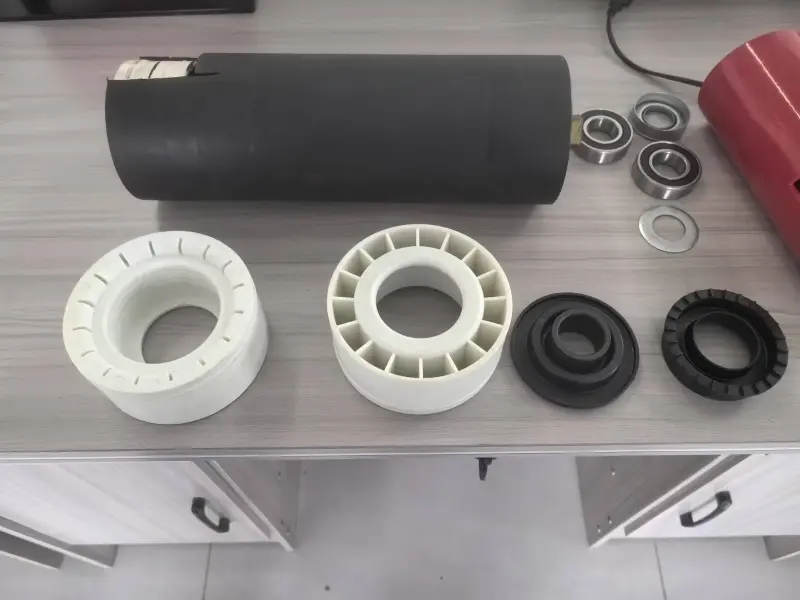
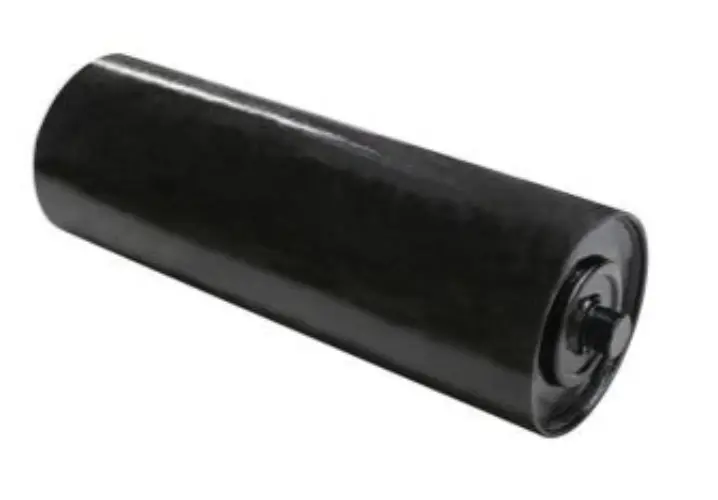
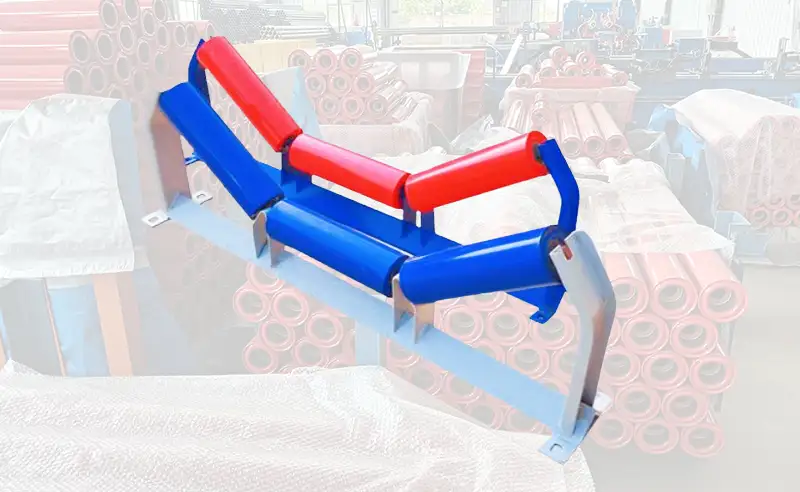
All types of idler rollers use high-quality idler-specific steel pipes, stamped bearing seats, and cold-drawn shafts. The stamped bearing seats are welded to the idler roller body using carbon dioxide gas shielded welding. Reliable dust-proof and rain-proof sealing measures must be provided at both ends of the roller, and lubrication is carried out using lithium-based grease.
Conveyor Idler
Conveyor Idler
The service life of idler rollers under normal working conditions shall not be less than 50,000 hours, and the failure rate shall not exceed 10% during the service life. After assembly, idler rollers must undergo sampling inspections, with performance testing items including dust-proofing, waterproofing, rotational resistance, axial movement, radial runout, etc.
Conveyor Pulley
Conveyor Pulley
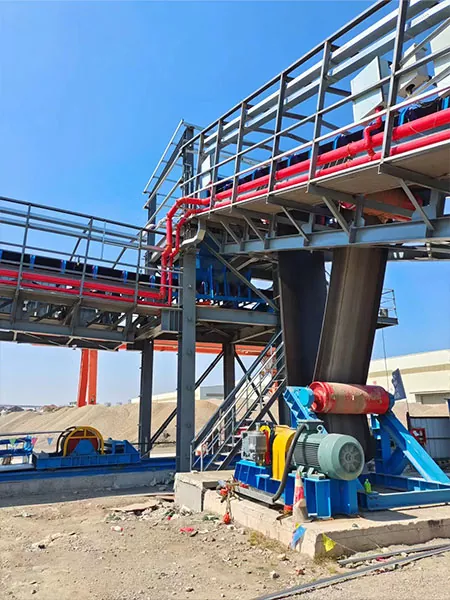
The selection of conveyor pulleys must be strictly based on the power of the conveyor belt, ensuring that the permissible torque meets the requirements for starting and various operating conditions of the belt conveyor. The pulley body adopts a cast-welded structure, and the connection between the hub and the axle is achieved through a sleeve expansion method. Welding between the hub and the rim must be fully penetrating continuous welding.
Conveyor Frame
Conveyor Frame
The plates and profiles used in manufacturing must be made of high-quality steel. The welding process for the brackets should meet relevant standard requirements, and ultrasonic testing should be conducted on the main tension welding areas.
Conveyor Belt Cleaner
All conveyor belts are equipped with dual cleaners, H-type and P-type, using polyurethane scraper blades. High molecular polyurethane scraper gap cleaners are installed at the tail and vertical tensioning device of each conveyor belt. The cleaners are equipped with pressure automatic adjustment control devices to ensure that the blade maintains proper pressure against the belt at all times, maintaining good contact with the belt to effectively remove materials adhering to the belt.
Mining Industry Conveyor Machine
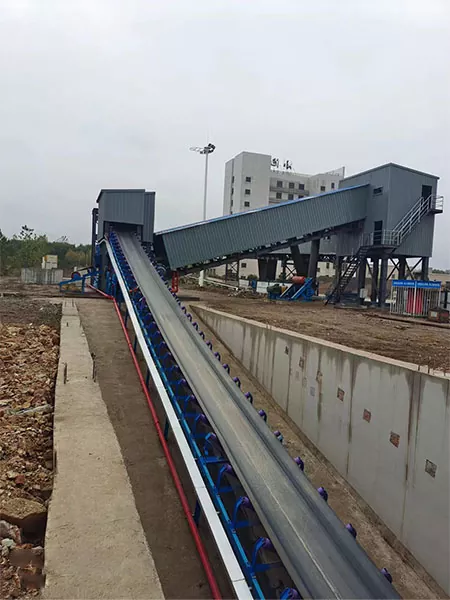
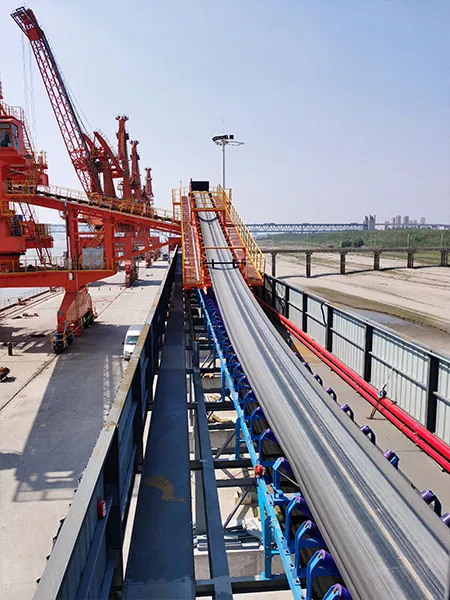
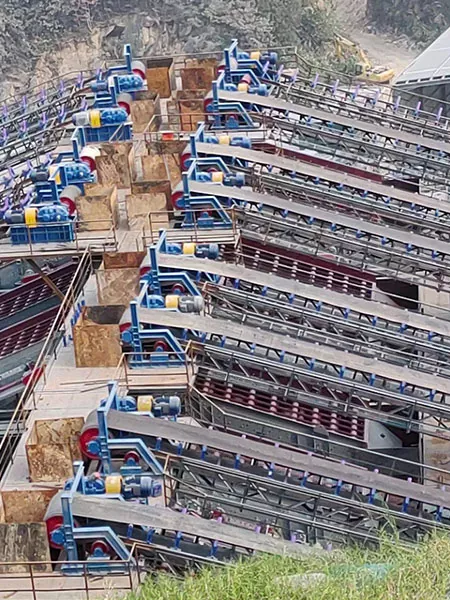
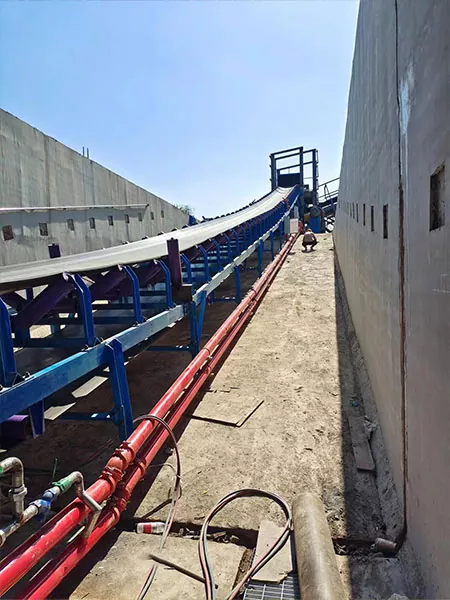
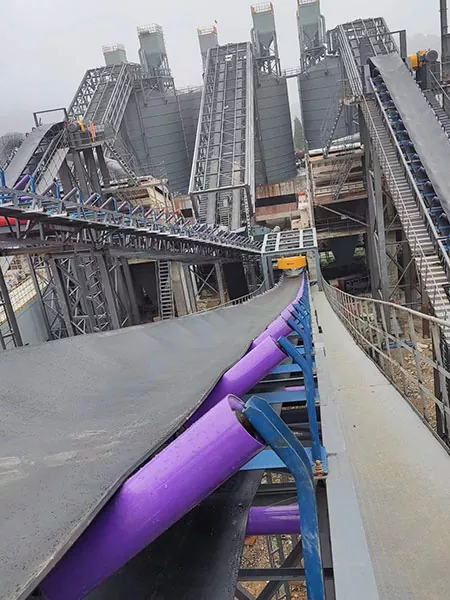
Belt conveyors must meet the requirements for long-term continuous operation. Startup, operation, and shutdown should be smooth and safely reliable. All belt conveyors are designed for full-load starting and braking. During continuous full-load operation, when the voltage is within 10% of the rated value, or the frequency varies within ±5% of the rated frequency, or both the voltage and frequency change simultaneously, but the absolute value of their combined variation does not exceed 10%, the belt conveyor should be able to start smoothly without damaging the equipment, with the full-load current not exceeding the rated current. When operating under design conditions, the rated capacity of the motor of the belt conveyor shall be not less than 120% of the power required for the maximum operating condition of the driven equipment.
Send Inquiry

Welcome to our website! For inquiries about our products or pricelist, please leave your email to us and we will be in touch within 24 hours.

X
We use cookies to offer you a better browsing experience, analyze site traffic and personalize content. By using this site, you agree to our use of cookies. Privacy Policy
Reject Accept