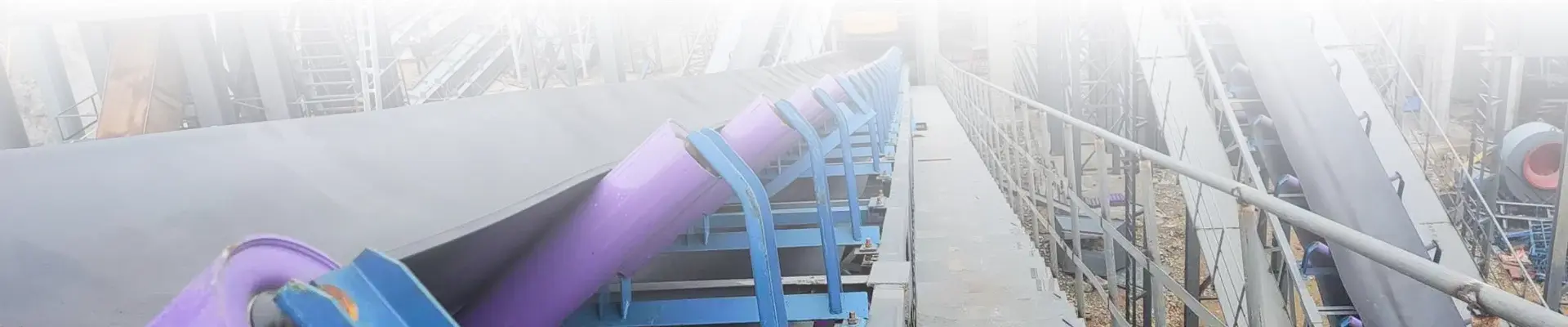
In the material conveying systems of industries such as mining, ports, and logistics, conveyors are core equipment that ensures the continuous operation of production. As the "skeletal support" of conveyors, idlers do not directly output power, but they maintain the stable operation of conveyor belts through functions such as resistance reduction, support, and guidance. They are key components that are easily overlooked yet indispensable. In addition to their core functions and maintenance points, common idler models on the market also vary significantly based on application scenarios. Understanding the characteristics of these models enables more accurate matching of different working condition requirements.
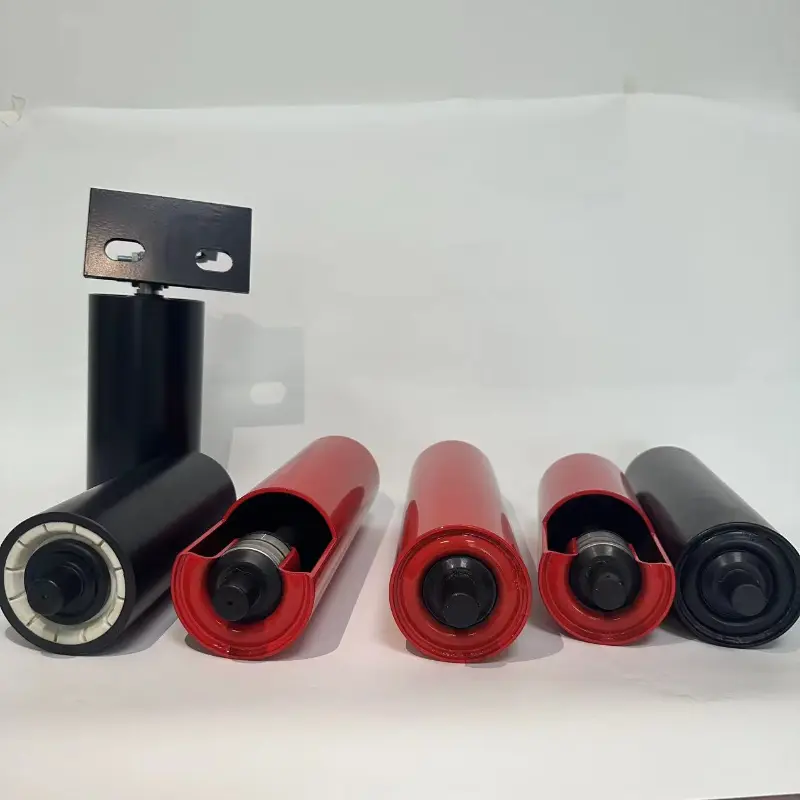
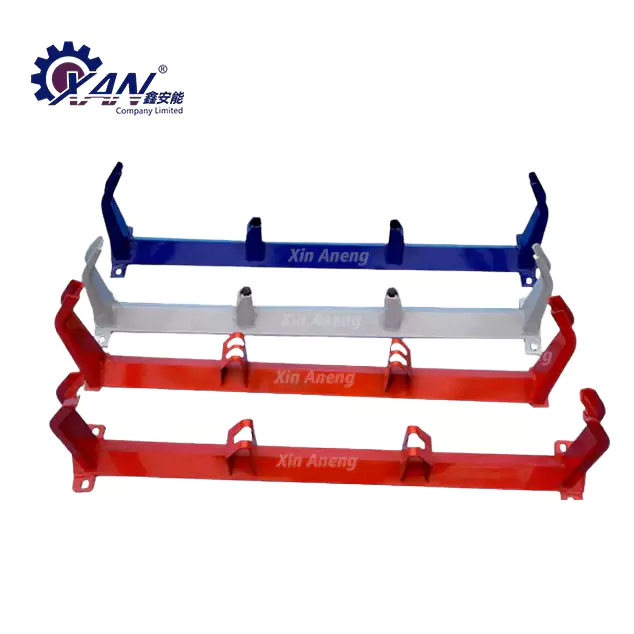
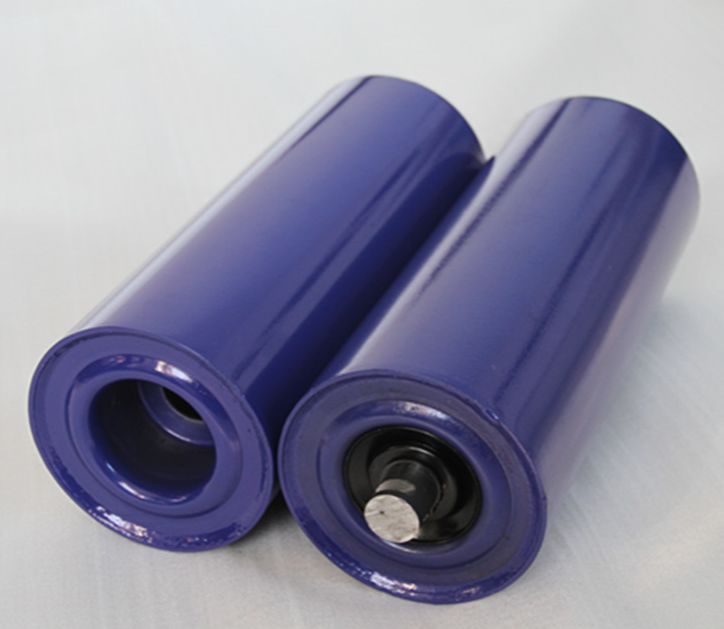
Classified by structure and function, common conveyor idlers on the market are mainly divided into three categories: ordinary roller-type idlers, self-aligning idlers, and impact idlers. Ordinary roller-type idlers are the most widely used basic models and can be further divided into upper roller idlers and lower roller idlers according to installation positions: Upper roller idlers mostly have a trough-shaped structure, with common trough angles of 30°, 35°, and 45°, which are suitable for conveyor belts of different widths. They are mainly used to support the upper conveyor belt that carries materials and disperse the weight of materials and the conveyor belt; Lower roller idlers mostly have a parallel structure, installed under the conveyor belt, responsible for supporting the empty conveyor belt and reducing the sagging range of the conveyor belt. Common diameter specifications are 89mm, 108mm, and 133mm. The larger the diameter, the stronger the load-bearing capacity and deformation resistance, making them suitable for long-distance and heavy-load conveyor systems.
Self-aligning idlers are specialized models designed to address the problem of conveyor belt deviation, and their core feature is the ability to automatically adjust the position of the conveyor belt. This type of idler is divided into friction self-aligning idlers and vertical roller self-aligning idlers: Friction self-aligning idlers sense the deviation trend of the conveyor belt through friction wheels on both sides. When the conveyor belt deviates, the friction wheels drive the idler bracket to rotate, generating a reverse thrust to correct the conveyor belt. They are often used in mining or chemical scenarios with complex working conditions where conveyor belts are prone to deviation; Vertical roller self-aligning idlers are equipped with vertical rollers on both sides of the idler. When the edge of the conveyor belt touches the vertical rollers, the vertical rollers restrict the deviation of the conveyor belt through mechanical guidance. They are suitable for small and medium-sized conveyors or horizontal conveying scenarios, with common length specifications matching the width of the conveyor belt, such as 800mm, 1000mm, and 1200mm.
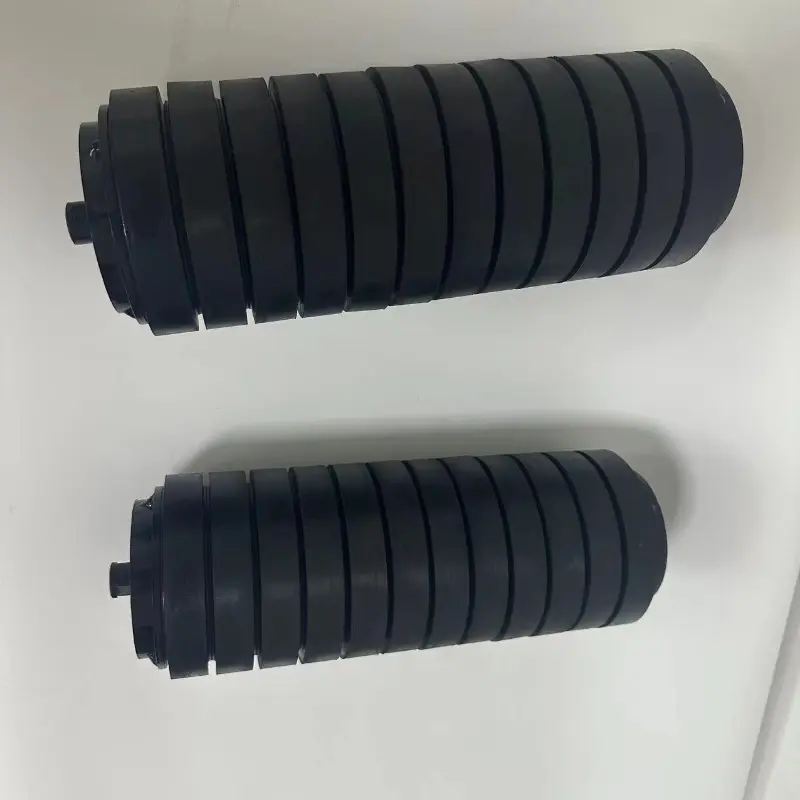
Impact idlers are specially designed to cope with the impact of falling materials and are essential models in scenarios such as port bulk cargo handling and mining crushing. Structurally, they mostly use elastic rubber rings or polyurethane outer layers to wrap the roller body, with high-strength bearings installed inside. When materials fall onto the conveyor belt from a high place, the elastic outer layer can absorb the impact energy, preventing direct impact of materials on the conveyor belt and avoiding damage to the belt. At the same time, the installation spacing of impact idlers is usually denser than that of ordinary idlers, with a common spacing of 300mm-500mm to enhance the impact buffering effect. Common diameter specifications are 108mm and 133mm, and the diameter of some heavy-duty impact idlers can reach 159mm, which is suitable for the conveying needs of large-sized materials.
Although different types of idlers have different functions, they all rely on high-quality materials and precise design to perform their roles. Whether it is the wear-resistant steel pipe material of ordinary roller-type idlers, the elastic outer layer of impact idlers, or the flexible bracket structure of self-aligning idlers, all are optimized designs for specific working conditions. In actual model selection, it is necessary to consider factors such as the properties of the conveyed materials (e.g., particle size, hardness), conveying speed, and environmental conditions (e.g., humidity, corrosiveness) to select a suitable idler model. At the same time, regular maintenance should be carried out to ensure the long-term and efficient operation of the conveyor system, allowing this "invisible hero" to continue safeguarding material conveying in various industries.