Xin Aneng supplies Carrying Idler Roller solutions designed to support the loaded side of belt conveyors while reducing belt sag, running resistance, and unnecessary wear. With a design focused on stable rotation, reliable sealing, and controlled radial runout, these rollers can support demanding bulk-material handling applications and are designed for up to 30,000 hours of service under normal working conditions.
A carrying idler roller is one of the essential components in a belt conveyor system because it continuously supports both the conveyor belt and the material being transported. Properly selected idlers help maintain belt shape, distribute load, reduce friction, and promote stable conveying. This guide explains how carrying idlers work, their main components, performance factors, available configurations, selection considerations, and maintenance practices. It also examines why roller precision, bearings, sealing, material quality, and conveyor operating conditions should all be considered when choosing an idler supplier.
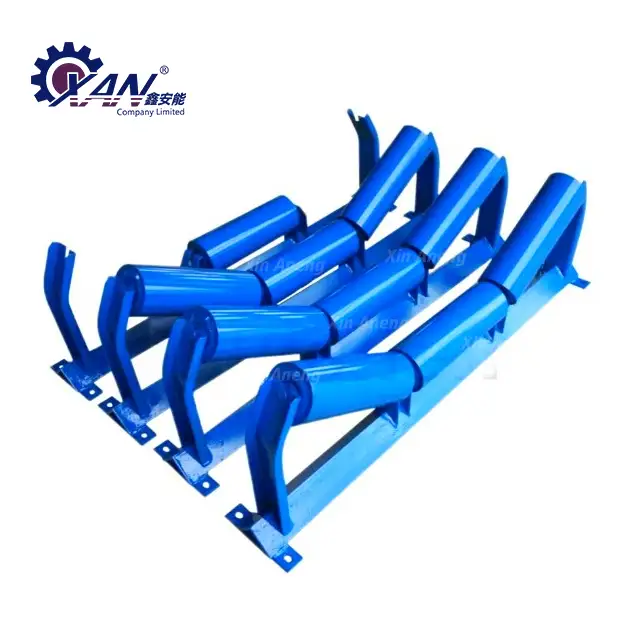
Table of Contents
- What Is a Carrying Idler Roller?
- How Does a Carrying Idler Roller Work?
- What Are the Key Components?
- What Benefits Does It Provide?
- What Types of Carrying Idlers Are Available?
- How Should You Select the Right Roller?
- Which Technical Factors Affect Performance?
- How Can Conveyor Idler Life Be Extended?
- Frequently Asked Questions
- Conclusion
What Is a Carrying Idler Roller?
A carrying idler roller is a rotating conveyor component installed beneath the carrying side of a belt conveyor. Its primary job is to support the belt and the bulk material placed on it as the belt moves along the conveying route.
Unlike a conveyor drive pulley, which provides the driving force, an idler mainly provides mechanical support and controlled rolling contact. Multiple rollers are normally arranged as an idler set, allowing the belt to maintain a suitable profile while carrying material.
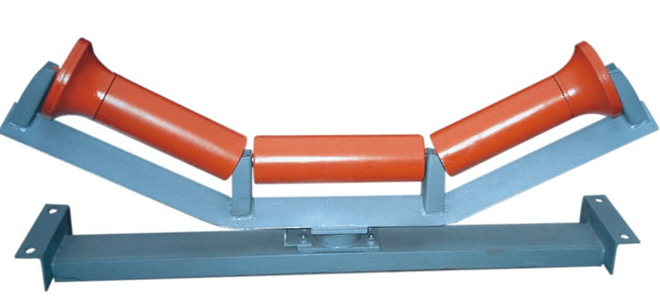
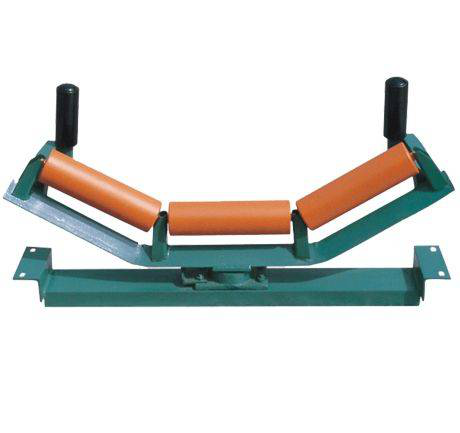
Depending on the conveyor design, carrying idlers can be configured as standard trough idlers, flat arrangements, impact-oriented designs, self-aligning configurations, or V-shaped solutions. The correct configuration depends on belt width, material characteristics, conveyor speed, loading conditions, and installation requirements.
For manufacturers and system integrators, selecting the appropriate carrying idler roller is therefore not simply a component purchasing decision. It directly affects conveyor stability, belt tracking, energy consumption, maintenance frequency, and operating life.
How Does a Carrying Idler Roller Work?
During operation, the conveyor belt moves over a series of rotating rollers. As bulk material is loaded onto the belt, its weight is transferred through the belt to the idler set and then to the conveyor frame.
A well-designed carrying arrangement performs several functions simultaneously:
- Supports the weight of the empty conveyor belt.
- Supports the material load being transported.
- Helps maintain the intended belt profile.
- Reduces belt sag between support points.
- Limits rolling resistance during conveying.
- Helps maintain smooth material transportation.
- Reduces unnecessary stress on the conveyor belt.
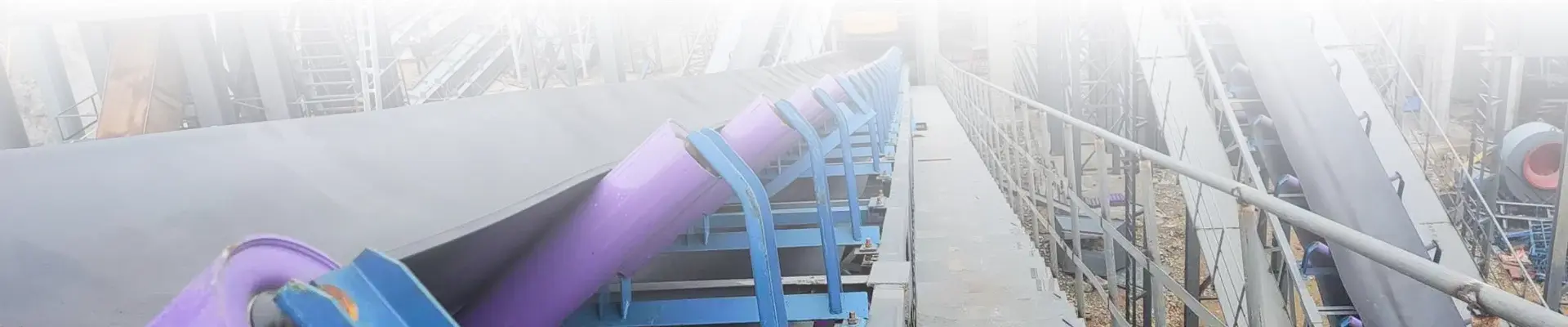
In a typical troughed conveyor, several rollers are positioned at an angle to form a trough. This configuration increases the belt's ability to retain bulk materials and can improve conveying capacity without requiring excessive belt width.
What Are the Key Components?
The reliability of a conveyor idler depends on the interaction of several components rather than the roller shell alone. A typical carrying idler assembly can include a shaft, bearings, seals, end caps, bearing seats, roller tube, and appropriate lubrication.
| Component | Primary Function | Why It Matters |
|---|---|---|
| Roller Tube | Provides the rotating support surface for the belt | Affects running smoothness, durability, and belt contact |
| Shaft | Provides structural support for the rotating assembly | Must withstand operating loads without excessive deformation |
| Bearing | Allows the roller to rotate with controlled resistance | Directly influences rotation quality and service life |
| Seal | Helps prevent contaminants from entering the bearing area | Important for dusty, wet, and demanding environments |
| End Cap | Supports and protects internal components | Contributes to assembly integrity and sealing performance |
| Lubrication | Reduces internal friction and wear | Supports smoother operation and bearing durability |
For this reason, quality control should cover raw materials, bearings, seals, production accuracy, assembly processes, and final inspection rather than focusing only on the external appearance of the roller.
What Benefits Does It Provide?
1. Better Belt Support
Continuous support reduces excessive belt sag and helps maintain a stable conveying surface. This is particularly important when the conveyor handles heavy or continuously loaded bulk materials.
2. Reduced Belt Wear
Evenly distributing the material load helps reduce localized stress on the belt. Proper roller rotation can also minimize unnecessary friction between the belt and support system.
3. Smoother Material Handling
Stable idler rotation allows the belt to travel consistently along the conveyor route. This can contribute to smoother material flow and reduce operational disturbances.
4. Longer Conveyor Belt Service Life
When the belt is correctly supported and rolling resistance is controlled, unnecessary mechanical stress can be reduced. Over time, this may contribute to longer belt life and lower replacement costs.
5. Lower Maintenance Requirements
Reliable bearings, effective sealing, accurate manufacturing, and suitable materials can reduce the frequency of premature idler replacement and unplanned conveyor downtime.
What Types of Carrying Idlers Are Available?
There is no single idler configuration suitable for every conveyor. Different conveyor layouts and material-handling conditions require different support arrangements.
- Standard Trough Idlers: Commonly used on the loaded side of bulk-material belt conveyors to form a trough profile.
- Flat Idlers: Suitable for applications where a flat belt profile is required.
- Impact Idlers: Designed for areas where material falls onto the belt and additional impact absorption is required.
- Self-Aligning Idlers: Used to help control belt tracking and reduce belt wandering.
- V-Shape Idlers: Used for particular conveyor configurations where a V-shaped support arrangement is preferred.
When designing or upgrading a conveyor system, the idler type should be selected together with the belt, pulley, bracket, loading point, and overall conveyor structure rather than treated as an isolated component.
How Should You Select the Right Roller?
Choosing the correct roller requires more than matching a catalog part number. Engineers and purchasing teams should evaluate the complete operating environment.
- Determine belt width: Wider belts generally require larger and more appropriately configured support systems.
- Check belt speed: Higher speeds place greater demands on rotational stability, balance, bearings, and sealing.
- Evaluate conveying capacity: The roller arrangement must support both belt weight and the maximum material load.
- Consider material characteristics: Abrasive, dusty, wet, sticky, or corrosive materials may require specific sealing and material choices.
- Review installation conditions: Temperature, humidity, dust exposure, outdoor installation, and cleaning conditions can influence roller selection.
- Confirm dimensional compatibility: Shaft dimensions, roller diameter, frame configuration, and mounting dimensions must match the conveyor.
For example, published carrying-idler performance data can cover belt widths from approximately 500 mm to 2,400 mm, with conveying capacity varying according to belt width and belt speed. This demonstrates why operating parameters should be confirmed before finalizing a specification.
Which Technical Factors Affect Performance?
Precision is one of the most important considerations when evaluating an industrial conveyor roller. Excessive radial runout can increase vibration and resistance, while poor bearing or sealing performance can shorten service life.
| Performance Factor | Potential Effect | Recommended Focus |
|---|---|---|
| Radial Runout | Can influence vibration and belt running stability | Maintain appropriate manufacturing accuracy |
| Bearing Quality | Affects rotation resistance and durability | Use suitable bearings for operating conditions |
| Sealing Performance | Helps protect internal components from contamination | Match seals to dust, moisture, and environmental exposure |
| Roller Surface | Influences belt contact and running resistance | Keep the surface smooth and properly finished |
| Shaft Strength | Determines resistance to axial and operational loads | Select dimensions according to the actual load |
| Lubrication | Influences bearing friction and wear | Use suitable grease and effective internal protection |
According to the available technical information, Xin Aneng's rollers use specialized bearings, lithium-based grease, and internal and external sealing. The product is specified for up to 30,000 hours under normal working conditions, although actual service life will depend on load, speed, environment, maintenance, installation, and other operating factors.
How Can Conveyor Idler Life Be Extended?
Even a well-manufactured idler requires appropriate installation and maintenance. A preventive maintenance program can help identify problems before they develop into belt or conveyor failures.
- Inspect rollers regularly for abnormal noise or vibration.
- Check for signs of seized or high-resistance rotation.
- Inspect seals for visible damage or contamination.
- Monitor belt tracking and investigate persistent belt deviation.
- Remove accumulated material around the roller assembly.
- Check mounting frames and shafts for looseness or deformation.
- Replace damaged rollers promptly to prevent secondary belt damage.
- Keep maintenance records to identify recurring failure patterns.
Routine inspection is especially important in mining, aggregate, ports, power generation, cement, metallurgy, and other bulk-material handling environments where conveyors may operate for long periods under substantial loads.
Frequently Asked Questions
What is the main purpose of a carrying idler roller?
The main purpose is to support the loaded side of a conveyor belt and the material being transported. It helps maintain belt shape, reduce sagging, control rolling resistance, and promote stable material handling.
What is the difference between a carrying idler and a return idler?
A carrying idler supports the loaded carrying side of the belt, while a return idler supports the empty return side as the belt travels back toward the conveyor loading area.
How is a carrying idler different from an impact idler?
A standard carrying idler primarily supports the belt and material during conveying. An impact idler is generally positioned at loading zones where falling material creates higher impact forces and additional belt protection is required.
How long can a carrying idler roller last?
Service life depends on the load, speed, material, environment, installation, maintenance, bearing quality, and sealing. Xin Aneng specifies up to 30,000 hours under normal working conditions, but actual performance should be evaluated according to the specific application.
What information should buyers provide when ordering?
Buyers should normally provide belt width, belt speed, conveying capacity, material characteristics, conveyor arrangement, roller diameter, shaft dimensions, installation environment, and any applicable technical or dimensional requirements. Providing complete information helps the manufacturer recommend a suitable configuration.
Conclusion
A carrying idler roller may be a relatively small component within a complete conveyor system, but its influence on belt support, material handling stability, wear, maintenance, and overall operating efficiency is significant. The right combination of roller structure, bearings, seals, lubrication, dimensional accuracy, and application-specific design can help conveyor operators achieve more reliable long-term performance.
For projects requiring dependable conveyor components, Xin Aneng's Carrying Idler Roller solution provides an option for demanding bulk-material conveying applications. If you are selecting rollers for a new conveyor, replacing existing idlers, or developing a customized conveying system, contact us with your belt width, speed, capacity, and operating conditions to discuss a suitable solution for your project.