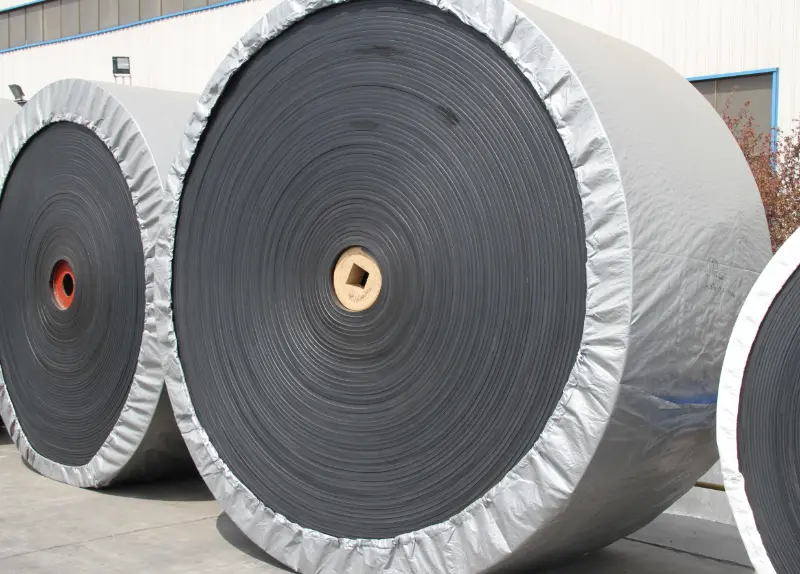
In the context of modern industrial production, there is a piece of equipment that, like "industrial blood vessels", silently undertakes the task of material transportation—it is the industrial conveyor rubber belt. As the core component of a belt conveyor, the industrial conveyor rubber belt is a flexible conveying member made mainly of rubber and matched with framework materials. It is widely used in many fields such as mining, metallurgy, coal, and chemical industry, and has become a key equipment connecting various links of production and improving conveying efficiency.
In many fields such as industrial production, logistics and warehousing, and mining, conveyor belt systems are indispensable core equipment. Acting like an "industrial artery", they enable the continuous, efficient, and automatic transmission of materials, greatly reducing labor costs and improving operational efficiency. Many people are curious about the operational logic behind this seemingly simple "conveyor belt" that facilitates the continuous and stable transportation of materials.
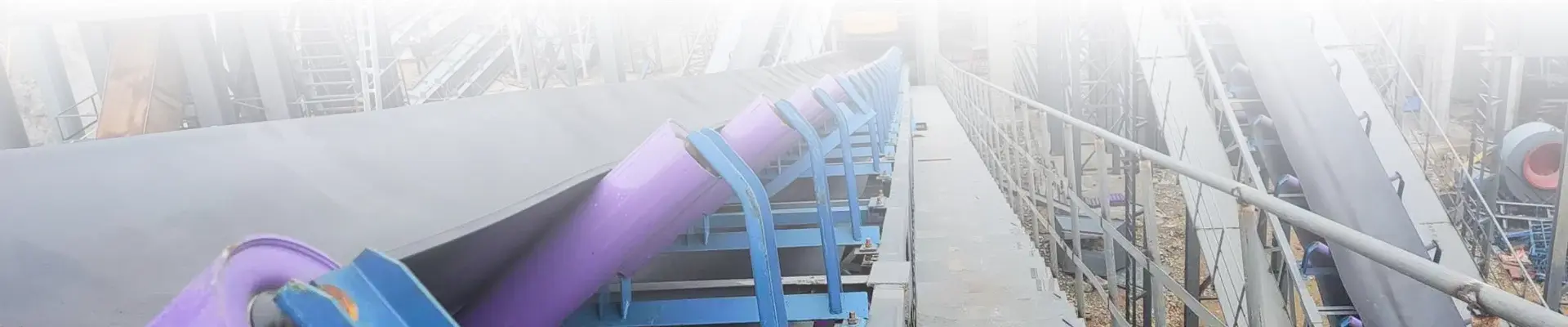
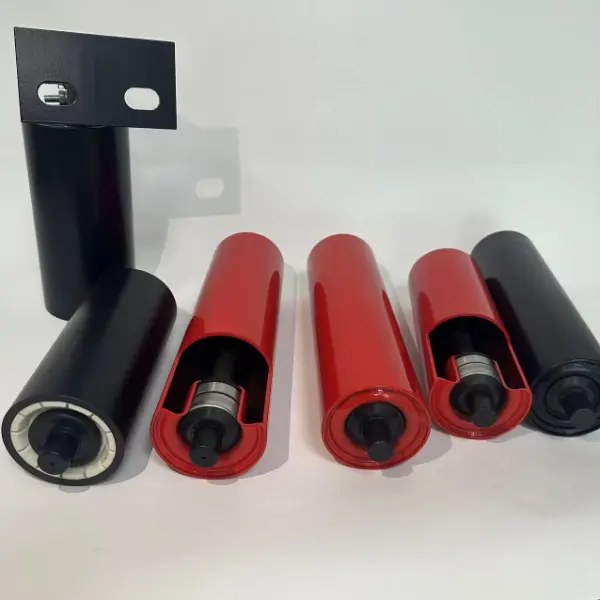
Idlers are the core supporting components of belt conveyors, widely used in conveying scenarios such as mines, ports, electric power, and building materials. Their operating status directly affects equipment stability, energy consumption, and the service life of the conveyor belt. Doing a good job in the daily maintenance of idlers can significantly reduce failure rates, extend service life, and ensure the continuous and efficient operation of the conveyor line.
As a core component of automated logistics and production systems, the selection of conveyor rollers directly determines equipment operation efficiency, service life, and operating costs. Faced with a wide range of specifications and parameters, precise matching must be achieved based on material characteristics, working condition requirements, and cost budgets. The following decomposes the selection logic from core dimensions to help avoid common misunderstandings.
In material conveying sites such as mines, ports, and power plants, belt conveyors are indispensable core equipment. As the "skeleton" of belt conveyors, idlers silently assume the key role of supporting the belt, reducing friction, and ensuring smooth conveying. Though seemingly simple cylindrical components, their working process embodies exquisite mechanical design and collaborative logic. Let's break down the working principle of idlers below.
Pulleys are the core bearing and transmission components of various material transportation equipment such as belt conveyors and roller conveyors. Their work centers on two core objectives: "power transmission" and "load bearing". They are divided into two categories: drive pulleys and driven pulleys (including idlers, direction-changing pulleys, and Tensioning pulleys). Different types of pulleys cooperate with each other to achieve continuous and stable transportation of materials. Whether it is heavy-duty mining transportation or light-duty logistics sorting, the operation of pulleys relies on three foundations: rotational support, friction transmission, and load bearing. Bearing connections ensure low-resistance rotation, friction provides power transmission, and high-strength materials bear the weight of materials and equipment tension.
We use cookies to offer you a better browsing experience, analyze site traffic and personalize content. By using this site, you agree to our use of cookies.Privacy Policy

 20 2026-03
  18 2026-03
  02 2026-03
  28 2026-01
  12 2026-01
  26 2025-12