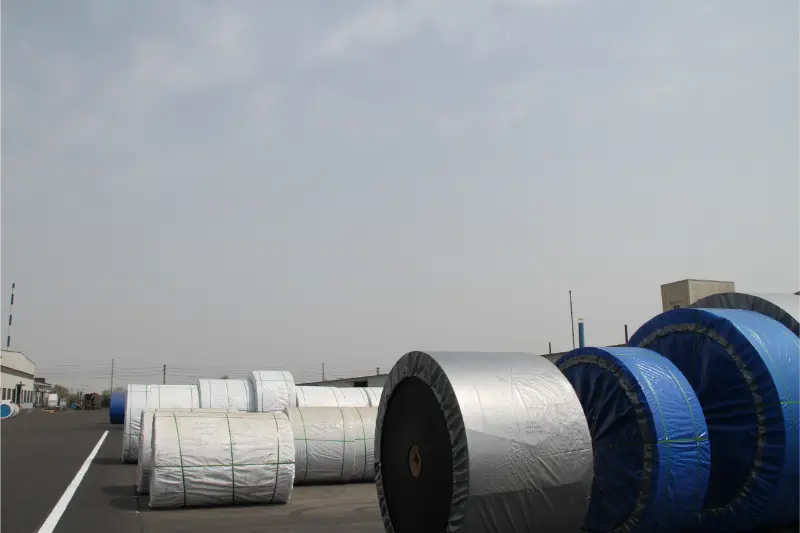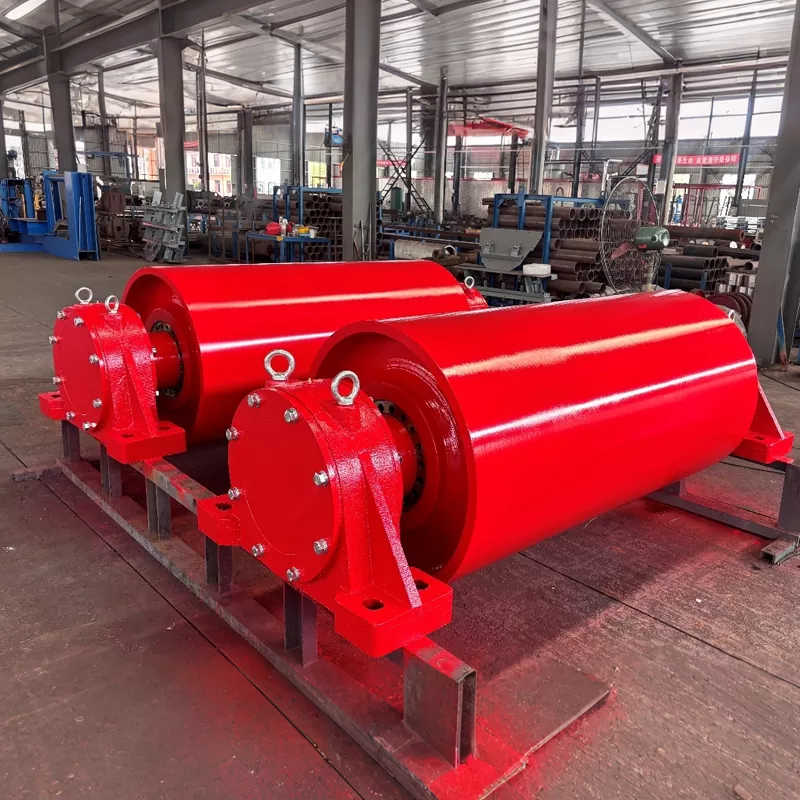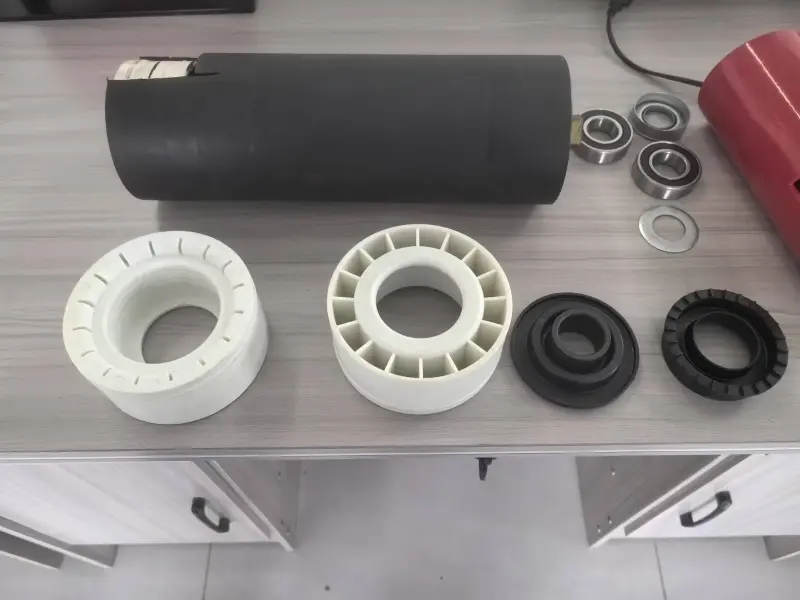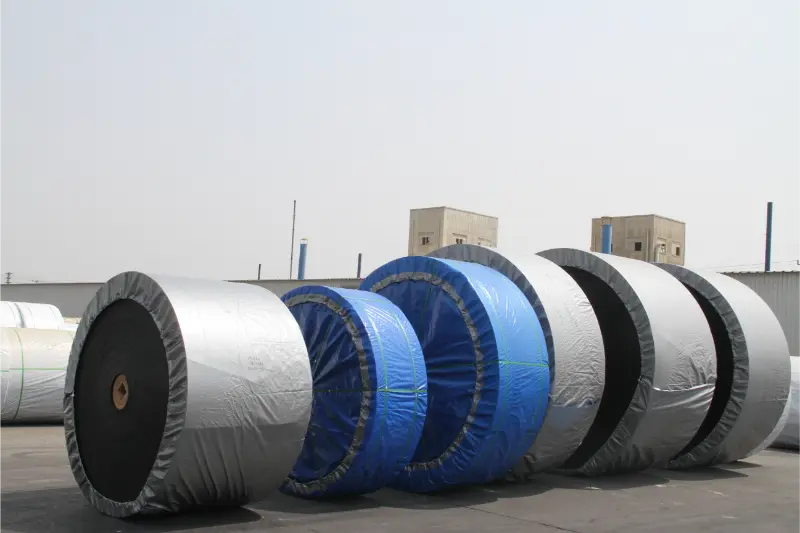
PVC conveyor belt, fully known as Polyvinyl Chloride fabric core conveyor belt, is a widely used light-duty conveying equipment in the industrial conveying field. Made primarily from PVC resin, it is combined with polyester or polyamide canvas core through processes such as impregnation and coating to form a conveying carrier with both flexibility and strength. It is mainly suitable for continuous conveying of bulk materials and unit goods under normal temperature environments。
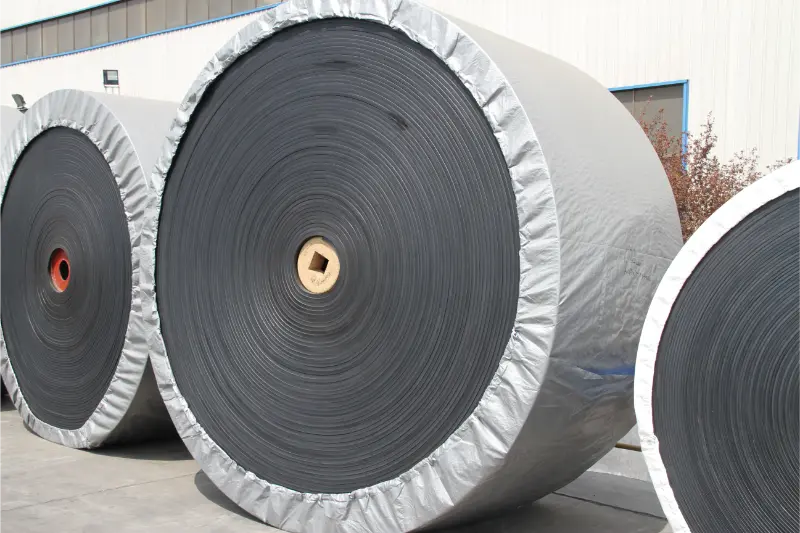
In terms of core structure, a PVC conveyor belt consists of three parts: core layer, cover layer and edge rubber.The core layer adopts multi-layer woven canvas bonded with rubber adhesive, bearing the main tensile load. Its layer count and density directly determine the bearing capacity and tensile resistance of the conveyor belt.The cover layer is mainly made of PVC resin with additives such as plasticizers and anti-aging agents, forming a wear-resistant and oil-resistant protective layer with uniform thickness. Its hardness and thickness can be adjusted according to application scenarios. Edge rubber is used to strengthen edge strength, prevent edge wear and tearing during operation, and extend service life.The three parts work together to enable the conveyor belt to withstand certain impact loads and adapt to high-speed and continuous conveying operations.
In terms of performance characteristics, PVC conveyor belts have three core advantages:Excellent weather resistance and corrosion resistance: It can resist corrosion from common media such as weak acid, weak alkali and grease, and is not easy to age or deform. Its applicable temperature range is -10°C to 60°C, meeting the needs of most normal-temperature industrial scenarios.Light weight and high flexibility: Compared with traditional rubber conveyor belts, PVC material has lower density, softer texture and strong bend ability. It is suitable for short-distance and small-inclination conveying lines, with easy installation and low maintenance cost.Qualified safety and hygiene: It meets the hygiene standards of food, pharmaceutical and other industries, releases no toxic substances, and can be directly used for conveying unit goods such as grain, beverages and daily necessities.
Classified by application scenarios, PVC conveyor belts have extremely wide adaptability:In logistics and warehousing, it is the core conveying carrier for unit goods such as parcels and cartons, suitable for express sorting lines and e-commerce warehouse assembly lines, maintaining stability even at high speeds.In the food processing industry, it can be used for conveying bread, candy, vegetables and other materials, with a smooth and easy-to-clean surface that complies with food hygiene requirements.In the chemical and building materials industries, it is suitable for short-distance conveying of bulk materials such as chemical fertilizer, cement and sand, and can meet the conveying needs of different materials with anti-adhesion and wear-resistant cover layers.In addition, in mines, ports and other scenarios, PVC conveyor belts can be customized to achieve special functions such as flame retardant and anti-static, expanding their application scope.
Compared with rubber conveyor belts, PVC conveyor belts have certain limitations in high temperature resistance and tear resistance. However, their advantages of lower cost, lighter weight and greater processing flexibility make them the first choice for light-duty conveying scenarios. With the popularization of industrial automation, PVC conveyor belts are developing towards high strength, multi-function and environmental protection. By optimizing the core layer weaving process and upgrading environmentally friendly PVC raw materials, their bearing capacity and service life are further improved, continuously serving the efficient operation of industrial production.