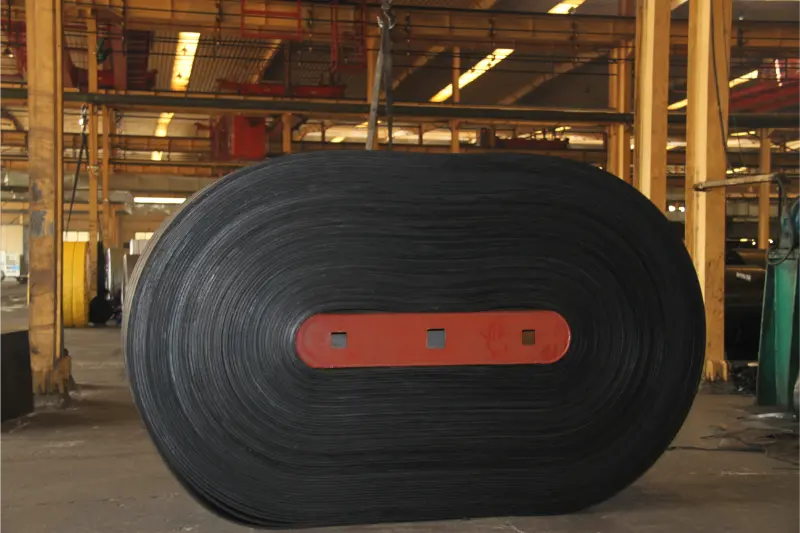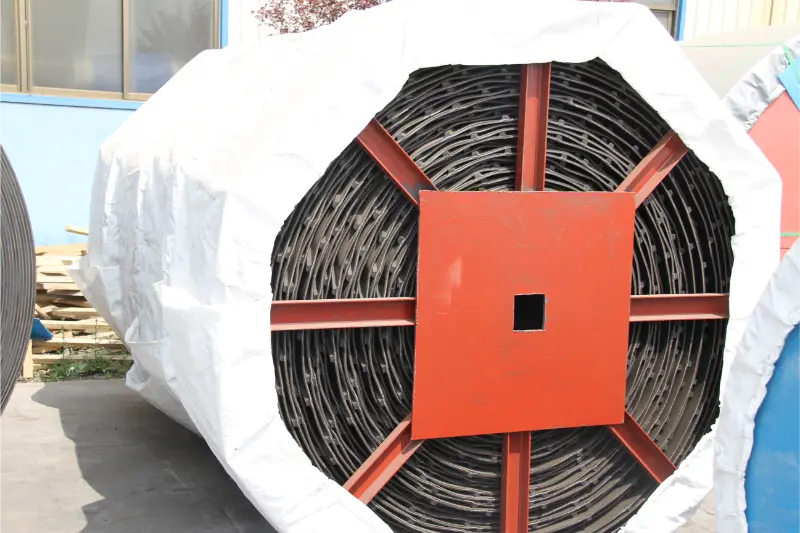
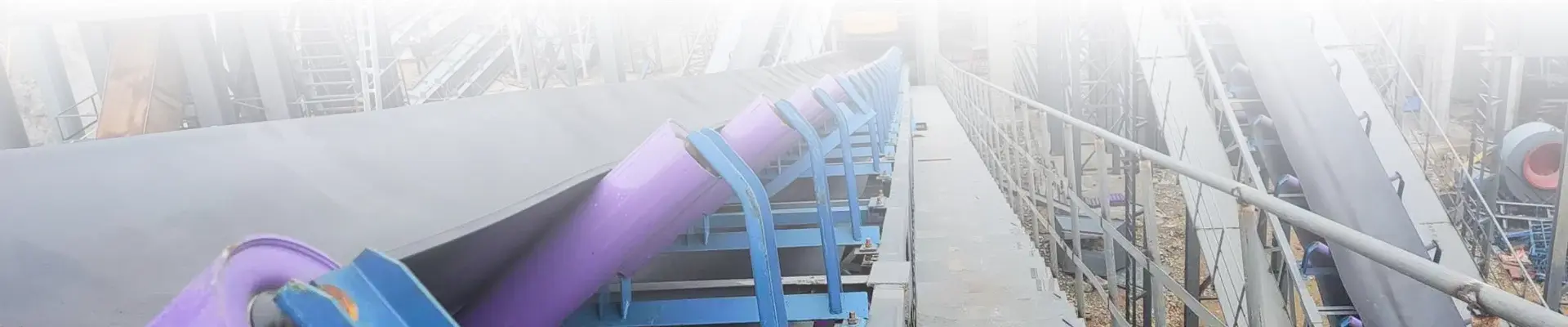
In modern industrial production, the continuous and efficient transport of materials is the core link ensuring the smooth operation of the production chain. In heavy industries such as coal mining, metal mining, ports, metallurgy, and power generation, the Steel Cord Conveyor Belt has become the undisputed "steel backbone," thanks to its exceptional performance in meeting the rigorous demands of long-distance, high-volume, and high-speed conveying.
The steel cord conveyor belt is a specialized rubber conveyor belt reinforced with longitudinally arranged, high-strength galvanized steel cords as its skeleton, covered with high-quality rubber. Its internal structure is precise, consisting of four main parts: the skim coat (core rubber), steel cords, top and bottom covers, and edge rubber. Advanced rubber formulas and cutting-edge bonding technology ensure extremely high adhesion strength between the steel cords and the rubber. This keeps the belt stable during dynamic operation and prevents separation.
Compared to traditional fabric-ply conveyor belts, the steel cord conveyor belt offers highly significant advantages. First is its astonishing tensile strength; according to the national standard GB/T9770, its strength ratings range from ST630 to ST5400, allowing it to withstand immense traction forces. Second is its exceptionally low elongation—typically only about one-fifth that of ordinary belts. This means there is no need for frequent adjustments to the tensioning device during long-distance transport. Additionally, it features excellent impact resistance, flex resistance, and troughability. Not only does it have a long service life, but the belt can also be retreaded after surface wear, significantly reducing the total lifecycle cost for enterprises.
To cope with complex industrial environments, steel cord conveyor belts are available in a wide variety of types. Based on the performance of the cover rubber, they can be classified as heat-resistant, cold-resistant (adaptable to temperatures as low as -60°C), acid and alkali resistant, oil resistant, flame-retardant, and anti-static. Furthermore, to address sharp impurities that may exist in the materials, anti-rip belts and even smart belts with embedded detection coils have been developed. When paired with detection devices, these can effectively prevent major safety accidents caused by longitudinal tearing.
Currently, steel cord conveyor belts are widely used in the long-span transport of bulk materials such as coal, ore, sand and gravel aggregates, and bulk grain. Under various extreme operating conditions, they consistently maintain efficient, stable, and safe operation, making them an indispensable key piece of equipment in modern continuous bulk material handling systems.