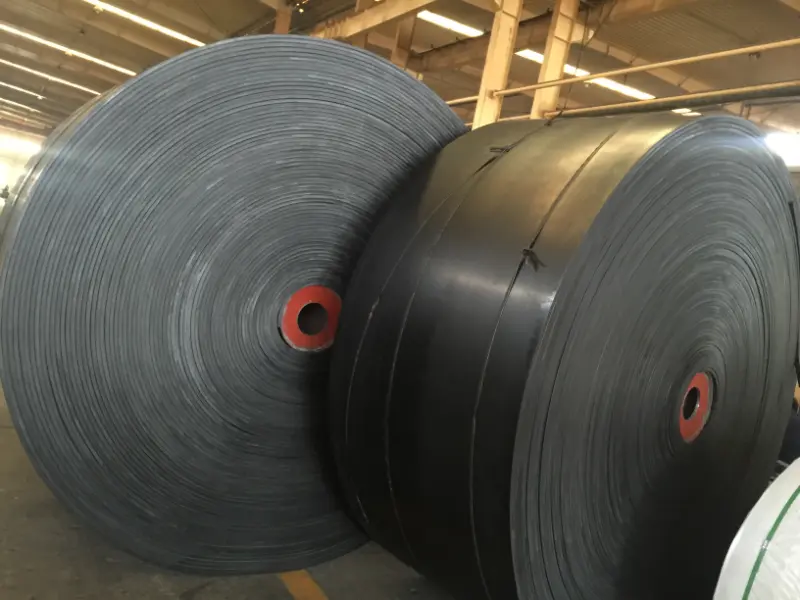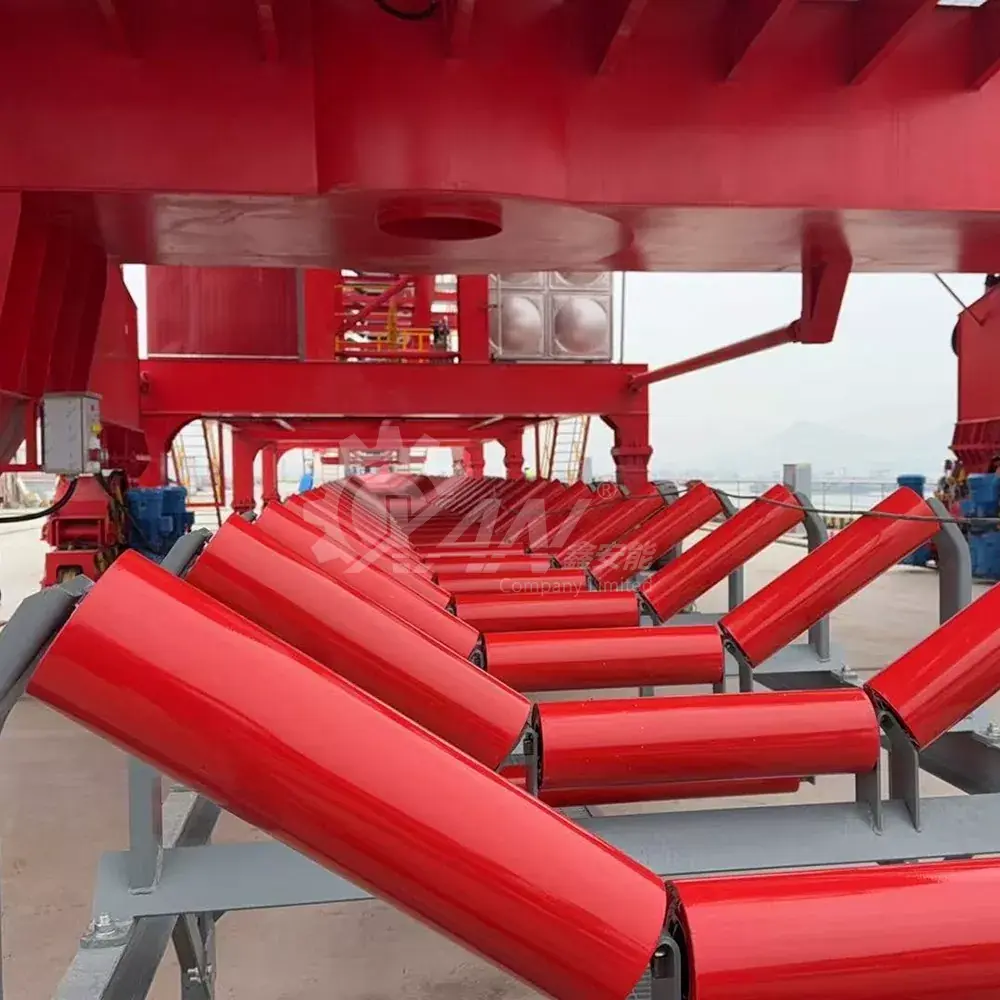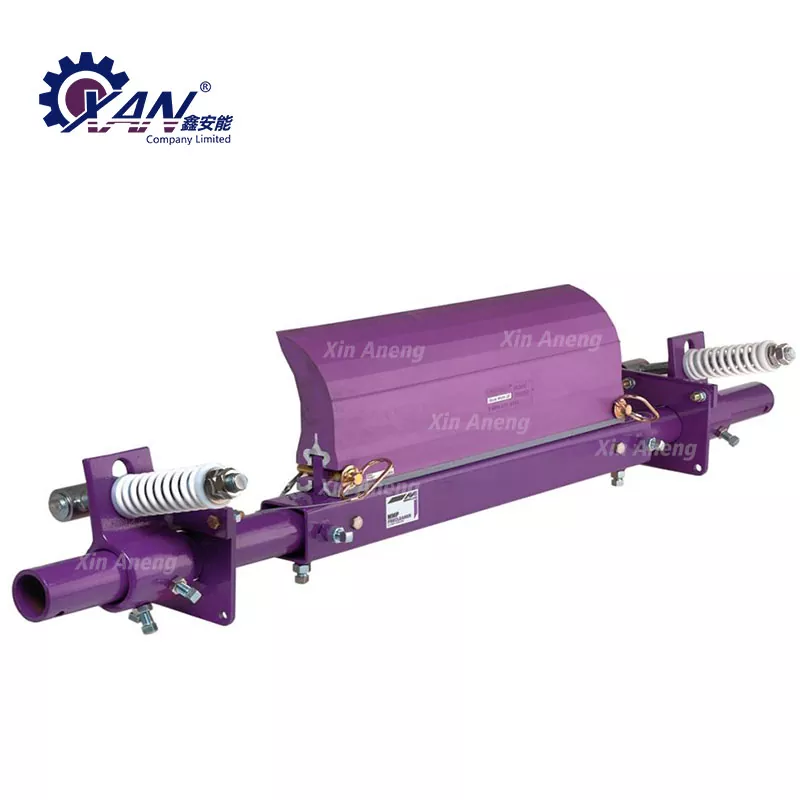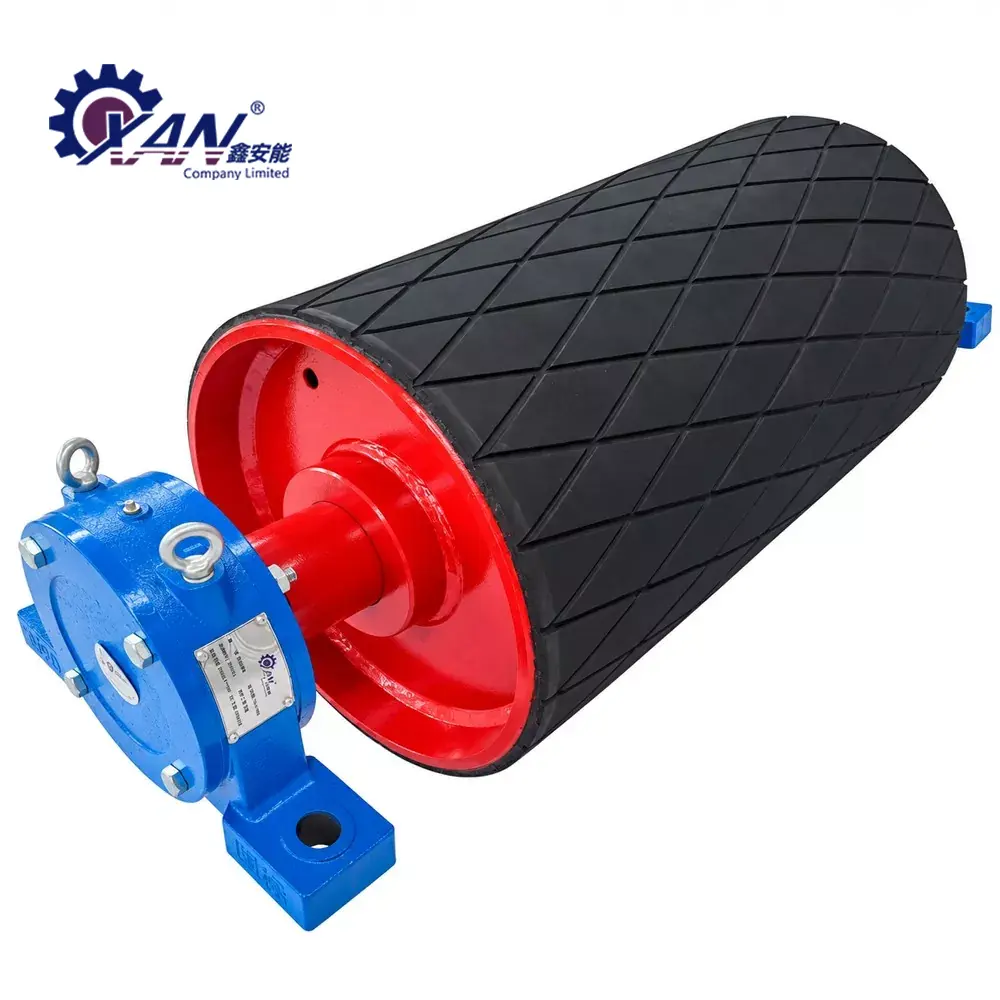
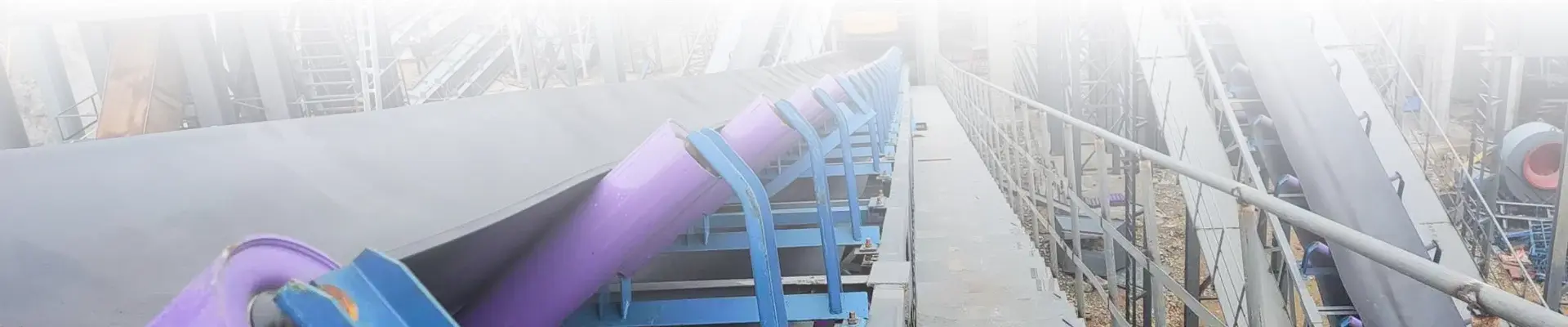
A heat resistant conveyor belt is a special industrial transmission belt designed for the continuous conveying of high-temperature materials. It is widely used in high-temperature production scenarios such as cement, metallurgy, coking, and electric power. Its core advantage is to maintain structural stability, resist aging, avoid cracking and prevent material adhesion in a continuous high-temperature environment, ensuring the safe and efficient operation of the conveying system.
Compared with ordinary conveyor belts, heat resistant conveyor belts are specially optimized in material formulation and structural design. Its surface cover rubber adopts high-temperature resistant rubber materials, mainly EPDM, which can withstand long-term temperatures of 150°C to 180°C with excellent oxidation and aging resistance. High-end models use fluororubber and silicone rubber, with temperature resistance up to 200°C to 300°C and stronger chemical stability. As the core strength component, the carcass layer mostly uses EP polyester-polyester fabric, featuring high strength and low elongation, and is not easily deformed at high temperatures; ultra-heavy-duty applications adopt steel cord, suitable for long-distance, heavy-load high-temperature conveying.
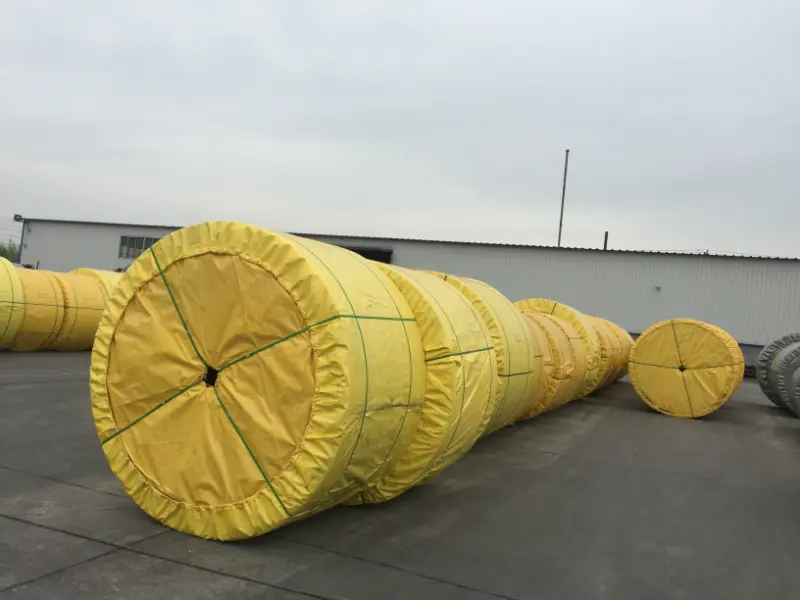
In accordance with industrial standards, heat resistant conveyor belts are divided into several grades to meet different temperature requirements. Grade T1 offers long-term temperature resistance of 100°C, suitable for medium and low-temperature hot materials; Grade T2 resists 125°C, commonly used for conveying cement clinker and hot aggregate; Grades T3 (150°C) and T4 (175°C to 180°C) can handle extreme high-temperature conditions such as sintered ore, coke, and high-temperature molten slag. The graded design enables more accurate equipment selection, balancing practicality and economy.
In industrial production, heat resistant conveyor belts play an irreplaceable role. Conveying high-temperature clinker in the cement industry, transferring red-hot sintered ore in metallurgy, transporting red-hot coke in coking plants, and conveying high-temperature ash in the power industry all rely on this type of conveyor belt. It can not only withstand the high temperature of materials but also resist thermal radiation and thermal shock, effectively avoiding softening, material adhesion, cracking, delamination and other problems of ordinary conveyor belts caused by high temperatures, greatly extending service life and reducing equipment maintenance costs.
In addition, high-quality heat resistant conveyor belts also feature wear resistance, impact resistance and anti-adhesion, adapting to block and granular high-temperature materials with stable operation and smooth conveying. Selection should be based on the actual material temperature, conveying load and working environment to match the corresponding grade and structure to ensure qualified performance.
As a core component in high-temperature conveying, heat resistant conveyor belts, with professional materials and scientific structures, solve the problem of high-temperature material conveying. They serve as an important guarantee for efficient, stable and safe continuous high-temperature production in modern industry.