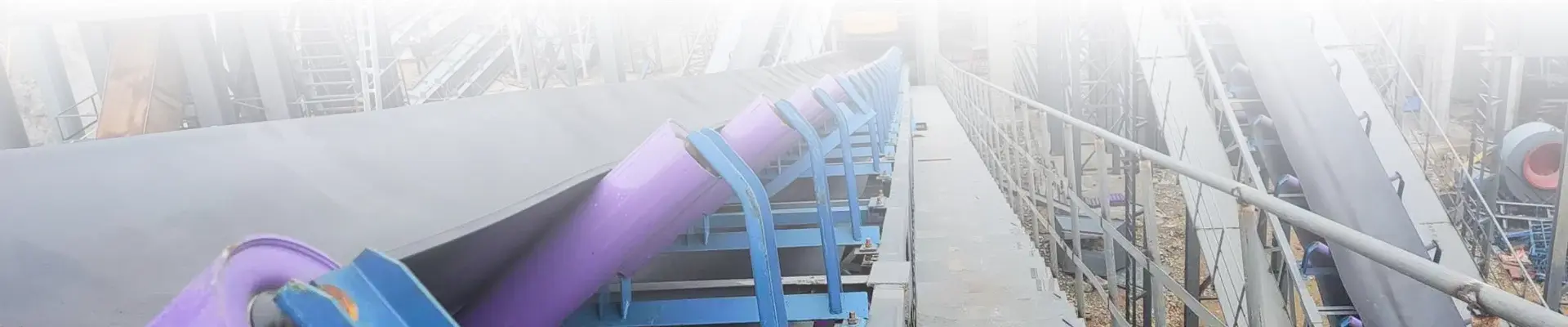
In material conveying sites such as mines, ports, and power plants, belt conveyors are indispensable core equipment. As the "skeleton" of belt conveyors, idlers silently assume the key role of supporting the belt, reducing friction, and ensuring smooth conveying. Though seemingly simple cylindrical components, their working process embodies exquisite mechanical design and collaborative logic. Let's break down the working principle of idlers below.
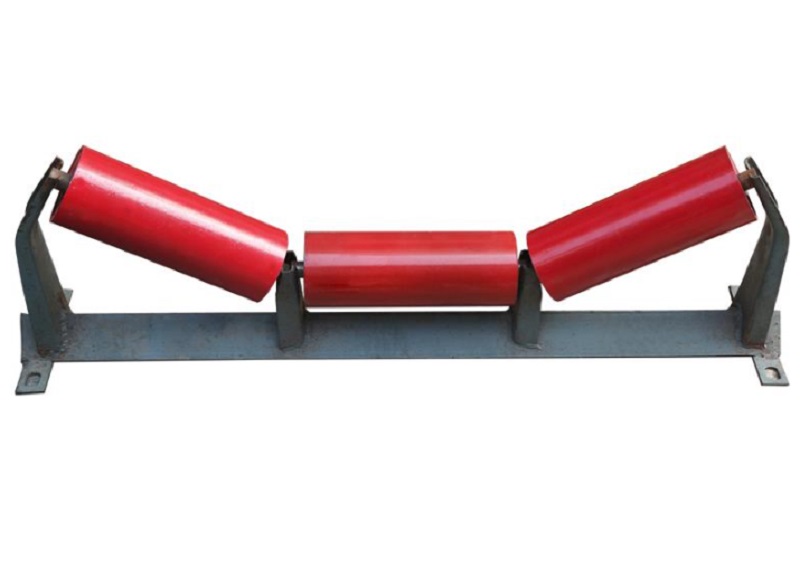
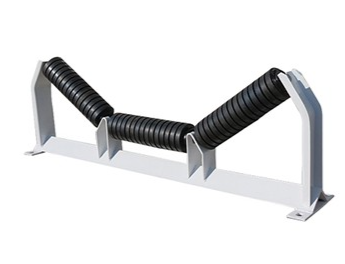
The core working mission of idlers is to support the weight of the conveyor belt and materials, preventing the belt from sagging and deforming due to gravity. On the frame of the belt conveyor, idlers are evenly arranged through bearing seats to form a continuous supporting surface. When the conveyor belt operates with materials, the roller bodies of the idlers are in close contact with the bottom surface of the conveyor belt, uniformly transmitting the weight of the materials and the tension of the belt itself to the frame, ensuring that the belt always maintains a stable running trajectory. Whether for horizontal conveying, inclined conveying, or turning conveying, different types of idlers (parallel idlers, trough idlers, self-aligning idlers) will adjust their arrangement angles according to force requirements to ensure support stability.

Reducing operational friction and lowering energy consumption is another key goal of idler operation. High-precision bearings are installed inside the idlers, and the roller bodies are connected to the sleeves through bearings to form a flexibly rotatable structure. When the conveyor belt runs, friction drives the idlers to rotate synchronously, converting the sliding friction between the conveyor belt and the idlers into rolling friction inside the bearings. The resistance of rolling friction is much smaller than that of sliding friction, which can not only greatly reduce the driving force consumption of the motor but also reduce the wear of the conveyor belt and the idlers themselves, extending the service life of both. To further improve lubrication effect and reduce friction loss, lubricating grease is also filled inside the idlers to ensure stable operation of the bearings under high-speed and heavy-load conditions.
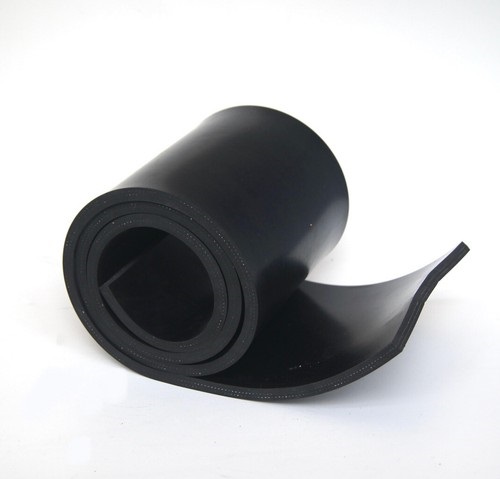
In complex conveying scenarios, idlers also need to cooperate to complete auxiliary tasks such as deviation adjustment and buffer shock absorption. When the conveyor belt deviates due to uneven force, the self-aligning idlers will drive the roller bodies to deflect automatically through sensing devices, generating reverse correction force to pull the deviated belt back to the correct trajectory; at material loading points, buffer idlers absorb the impact force of falling materials through the rubber sleeves on the outer layer, avoiding direct impact of materials on the belt causing damage; in high-temperature, humid or dusty environments, sealed idlers block dust and water vapor from entering the interior through dust covers and sealing rings, preventing bearing jamming and failure.
The working process of idlers is essentially a collaborative process of mechanical balance and energy conversion: through the rotational cooperation between bearings and roller bodies, sliding friction is converted into rolling friction; through the evenly arranged supporting structure, stable transmission of weight is achieved; through the functional complementarity of different types of idlers, complex conveying needs are met. It is this simple and efficient working logic that makes idlers an important guarantee for the efficient operation of belt conveyors, playing an irreplaceable basic role in the material conveying chains of various industrial productions.